HELPING CLINICIANS CONFIDENTLY NAVIGATE THE UNCERTAIN WORLD OF BACK PAIN USING A PRACTICAL & EVIDENCE BASED FRAMEWORK
Albufeira, Algarve
Rua José Carlos Ary dos Santos A, Portugal
5/6th DECEMBER 2026
Early registration pricing
Sign me up
It's time for a course that doesn't offer implausible quick fixes or magical results, but instead an honest look at the latest research & how to apply it to patients!
Lose the rigid complicated protocols & methods that can can make you feel lost & stupid, and replace it with a flexible evidence & person based framework that allows you to express your own treatment style!
WHAT SKILLS DO YOU GET?
-
Confidently & simply differentiate serious, specific & non specific back pain using research based assessment criteria
-
Learn how to treat different types of painful presentations quickly, efficiently & scientifically
-
Effectively reassure & educate using targeted education & knowledge coaching for true patient buy in
-
Build strong therapeutic relationships for improved outcomes with evidenced based strategies.
-
Help your patients choose the best exercises for them by taking the guess work out of exercise prescription for pain, performance and long term behaviour change
-
Easily navigate uncertainty to minimise patient and clinician anxiety that can paralyse rehab
-
Help patients dispel common myths around back pain that can hold their rehab back
-
Finally understand the BPS model for more treatment options!
OUTLINE
Back pain is so much more than biomechanics or pathology.
It’s time to treat it that way.
The evidence is clear: back pain is best understood through a whole-person, biopsychosocial lens — not just pathology, posture, or tissue damage.
Modern clinical practice can feel overwhelming & many clinicians leave formal education feeling underprepared to treat in a contemporary BPS way.
Rehab for Painful Backs is a course about back pain, but not only back pain. What you’ll learn applies to many pain problems, across patients, sports, and settings.
We break down the complexity of back pain while helping you treat patients in a simpler, more human, and more effective way. You’ll develop practical skills across the full biopsychosocial spectrum — without getting lost in theory.
We do the heavy lifting for you — bringing together the latest high-quality research, and showing you exactly how to apply it in YOUR practice.
This course provides a clear, evidence-based framework for clinical reasoning that reduces confusion, anxiety, and guesswork — for both clinicians and patients. Whether you’re a new grad or an experienced clinician, you’ll leave feeling more confident, calm, and capable.
We move beyond the outdated biomedical model — one that has failed many people in pain — and toward a modern, integrated biopsychosocial approach.
You’ll learn:
-
BPS model & modern pain science for 2026
-
Psychology & communication skills
-
Exercise & movement prescription
-
Motor learning principles
- Back assessment
All aimed at a patient-centred, active approach to rehab.
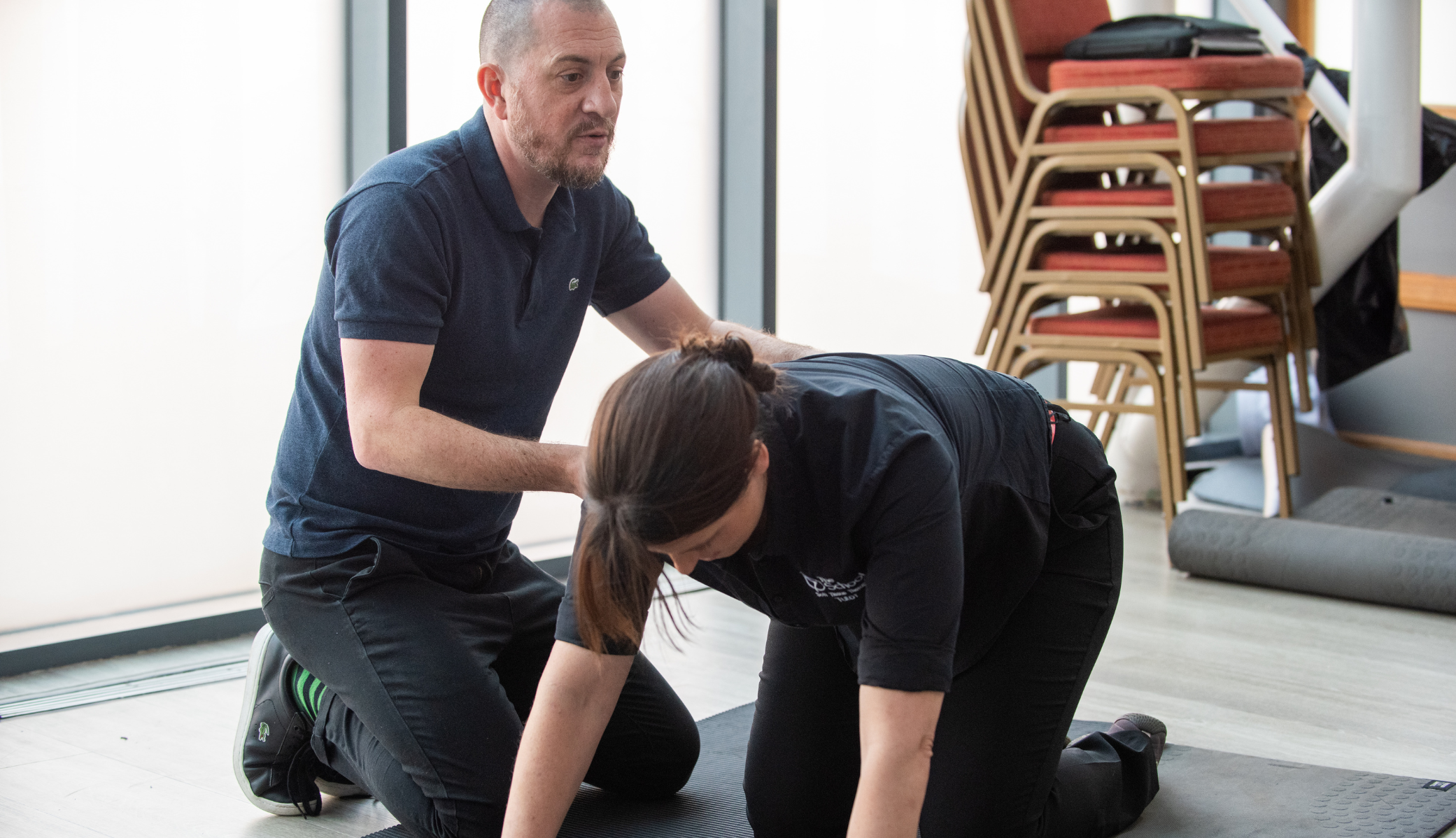
This isn’t a passive course. Expect discussion, movement, and challenge. From group problem-solving and case studies to practical, movement-based tasks, you’ll feel what your patients feel — and understand them better because of it.
This is not a list of exercises you could’ve watched on YouTube.
It’s about thinking better, communicating better, and cutting the unnecessary fluff that doesn’t help people in pain.
Be ready to move, reflect, debate — and have some biases challenged.
Taught across 5 continents, 30+ countries, and to hundreds of clinicians and coaches, this course blends evidence, experience, discussion, laughter, and movement into one powerful learning experience.
What you will get
- Gain comprehensive back pain knowledge that will help you understand, explain, assess & treat back pain from a truly evidence-based position
- Simple ready to use strategies for common back pain problems
- A brand new streamlined pain science approach. Lose the complex neuroscience explanations
- Psychologically informed communication & interviewing strategies to help people ‘make sense’ of painful problems
- BPS exercise ‘prescription’ model that moves beyond just the tissue
- An ability to confidently navigate uncertainty in diagnosis & treatment
- Appreciate movement variability and dynamic systems theory to forget “good/bad” movement/exercise models
- Learn an exercise dosing model that redefines pain & exercise
Who is it for?
- Anyone with a passion to learn & help painful problems
- Those open to new ideas and concepts and the latest research
Who is it not for?
- Those expecting simple protocols or quick fixes
- Unwilling to engage in learning
- Not looking to update their current knowledge & paradigm
Content
- 40% Lecture
- 30% Practical
- 15% Discussion
- 15% Case study


Day 1
- 9am – Intro, key course concepts & understanding EBP better
- 10am – The role of natural history
- 10.15 - Contextual factors, communication & subjective Ax
- 10.45am - Break
- 11am - Back pain is more than just the back – The role of lifestyle & health (moving from biomechanics to biology) inc case studies
- 11.30 – Exercise for back pain – How it really works & how to maximise it!
- 12.30pm – Lunch
- 1.30pm – How do people with back pain move, and does it really matter?
- 2.15pm – Practical Movement master class – Tasks, environment & fun! (Creating a movement experience)
- 2.45pm - Graded approaches – Exposure, activity & exercise
- 3pm – Break
- 3.15pm – Dosing exercise – Learn “appropriate load” & using “rule of 10”
- 4pm - Acute LBP rehab – The role of the movement snack
- 4.30pm – Finish
Day 2
Day 2 will have shorter breaks and lunch to allow you to get home earlier!
- 9am –Recap day 1
- 9.30 - BPS S & C – Finding opportunities to help across the BPS spectrum
- 10.30 - Break
- 10.45am - Serious (red flags), specific & non specific back pain.
- 11.15am - Back pain assessment workshop
- 12pm – Lunch
- 1pm – Assessment case studies
- 1.30pm - Advice & education for back pain – What do you need to know
- 2pm - Exercise for back pain (Mid & late stage)
- 2.45 - The big messages T shirt edition
- 3pm - Finish

"Even though I have been following @corkinetic for a full six years and had an idea of the level this course would be at, it still exceeded all expectations.
By helping us untangle the complexity of low back pain, Ben actually gives us a new pair of glasses (that we didn’t even know we needed) through which we can see any painful musculoskeletal problem - and the person who has it - in a different way.
It is much less about anatomy and structure, and much more about the person and their biology. Not because anatomy is not important, but because it is only one small part of everything we need to consider when working with people in pain.
And no, this course is definitely not for everyone.
Any therapist who is still blinded by methods, concepts, techniques, blades, cups, tape, needles, biomechanics, fascia, miracle tests and diagnostics - and looks there for both the cause, the consequence, and the treatment of pain - will probably find this too much to handle.
But it seems we all need to go through that path of wandering and exploring, trial and error, before accepting that there are no quick magical solutions, that complex things cannot be oversimplified, and that a person with low back pain is much more than a muscle imbalance, one leg longer than the other, a weak core, or a trigger point that needs a needle.
We need to understand anatomy and pathology very well, recognise what truly matters in assessment, avoid wasting time on irrelevant things, listen to what the patient is telling us, understand how pain affects their life the most, and build treatment around what they want to return to or start doing.
And that is exactly what we got at Ben Cormack’s course Rehab for Painful Backs"
Maja, Croatia 2026

"I recently attended Ben’s course, and I genuinely found it both inspiring and thought-provoking.
It felt very up to date, with lots of contemporary perspectives and a strong integration of current research and references throughout. What stood out to me was how clinically relevant it all was.
Even though the main focus was on back pain, many of the ideas and approaches are easily transferable to other musculoskeletal conditions, which made it very useful in a broader clinical context. I’ve been on quite a few courses over the years, and one of the challenges is often translating new knowledge into everyday practice. This course felt different in that regard – I left with several ideas and perspectives that I could start integrating straight away.
Ben is not only a very knowledgeable and inspiring teacher, but also a genuinely nice and approachable guy, which created a relaxed and engaging learning environment throughout the weekend.
I’d warmly recommend this course to anyone working with musculoskeletal pain who is looking to update their thinking and bring new perspectives into their clinical practice"
Jeppe, Copenhagen 2026

Cancellations
Here at Cor-kinetic we are aware that plans can and do change. In light of this refunds are available up to 4 weeks before the course starting date. After this you can swap your course place to another date.
Very occasionally a course will have to be rescheduled (no later than 4 weeks before), especially post COVID. If you are travelling internationally or a long distance please book travel/accommodation with this in mind.
Refunds will incur a 3% fee per transaction, due to policy changes from payment platforms.